The Department of Cardiology

The Cardiology Department at the Max Grundig Klinik stands for modern, holistic cardiac care. We combine cardiological expertise with innovative technology and a tranquil, personal atmosphere. We offer our services on both an outpatient and inpatient basis—for instance, in cases of cardiac arrhythmias or as part of follow-up rehabilitation following cardiovascular surgeries or procedures.
Medical Director and Chief Physician of Cardiology

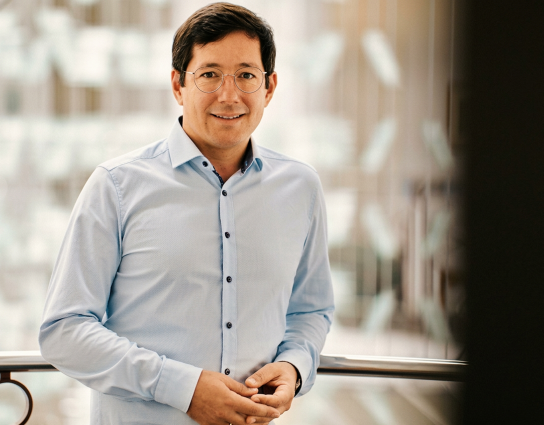
Prof. Dr. med. Timo Heidt is a Specialist in Internal Medicine and Cardiology, a Sports Cardiologist, and a DGPR-certified Specialist in Cardiovascular Preventive Medicine.

Portrait von Prof. Dr. med. Timo Heidt

Dr. med. Timo Heidt studied human medicine at the Universities of Saarland and Freiburg im Breisgau. After obtaining his medical license in 2009, he completed his specialist training at the University Medical Center Freiburg and the University Heart Center Freiburg–Bad Krozingen; in 2019, he was appointed Senior Physician in the field of interventional treatment for coronary and structural heart diseases.

During a two-year research fellowship at Massachusetts General Hospital—part of the renowned Harvard University in Boston, USA—he investigated the role of the innate immune system following a heart attack, as well as the interactions between psychological factors and cardiovascular diseases.

Following his Habilitation in 2018, he was appointed Adjunct Professor at the Faculty of Medicine of the Albert Ludwig University of Freiburg in 2022. He is a recognized expert in the field of interventional therapies.

He holds advanced qualifications in cardiac MRI and CT and is certified according to the highest national and international standards. As a specialist in cardiovascular preventive medicine and hypertension, he focuses on the optimization of cardiovascular risk factors.

Since October 2023, he has served as Chief Physician of Cardiology at the Max Grundig Clinic; since July 2025, he has led the Max Grundig Clinic as its Medical Director.

Medical Treatment Areas

We can help you with these services.

We can help you with these services.

  • The ECG serves to analyze heart rhythm and to detect rhythm disturbances and changes indicative of circulatory disorders or heart disease. Cardisiography complements this through 3D vector analyses of the propagation and regression of electrical excitation, providing additional information regarding blood flow, cardiac structure, and arrhythmias.

In a personal consultation, we will discuss your individual cardiac prevention or treatment plan together.  

Request a Callback

Team-Based Cardiology: Holistic Cardiac Medicine through Interdisciplinary Collaboration

We do not view heart disease in isolation, but rather within the context of your overall health profile—carefully, interdisciplinarily, and personally. We aim to understand *you*—not merely your symptoms. For this reason, we integrate cardiological expertise with other fields of internal medicine and psychosomatics. After all, our focus lies not on isolated findings, but on your individual health.

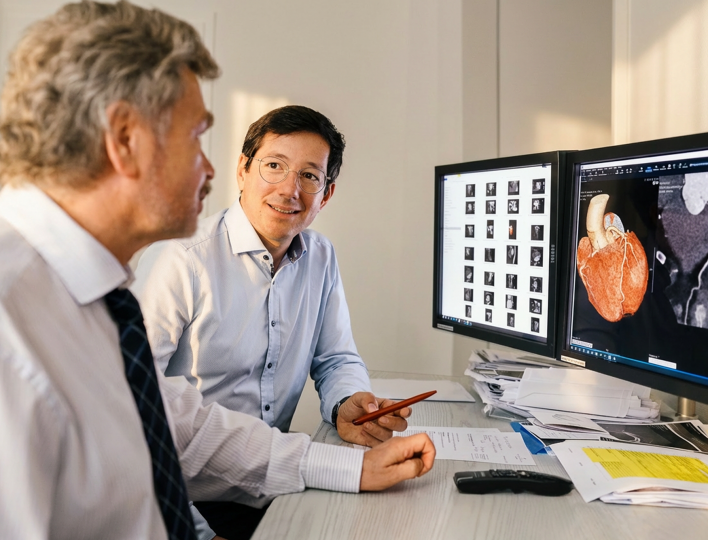
Ärzte besprechen Untersuchungsergebnisse am Computer

Chest Pressure: When It’s Not the Heart…!

A patient presented with recurrent pressure-like chest pain. These symptoms occurred under various circumstances—both at rest and during physical exertion.

Cardiological diagnostics revealed no significant evidence of coronary artery disease; furthermore, subsequent investigations—including risk assessment and cardiac functional testing—yielded no abnormal findings. Nevertheless, the symptoms were severely debilitating and caused the patient considerable distress and uncertainty.

Consequently, the Department of Psychosomatics was consulted during an interdisciplinary case conference. Clinical interviews revealed a pattern characterized by high levels of internal tension, sleep deprivation, and recurrent anxiety—sensations that were physically experienced as “cardiac symptoms.”

Through the combined approach of cardiological diagnostics and psychosomatic evaluation, the underlying cause was clearly identified. A targeted psychocardiological therapy regimen—consisting of biofeedback training accompanied by psychotherapeutic support and physical activation—successfully reduced the frequency of these episodes and restored the patient’s quality of life.

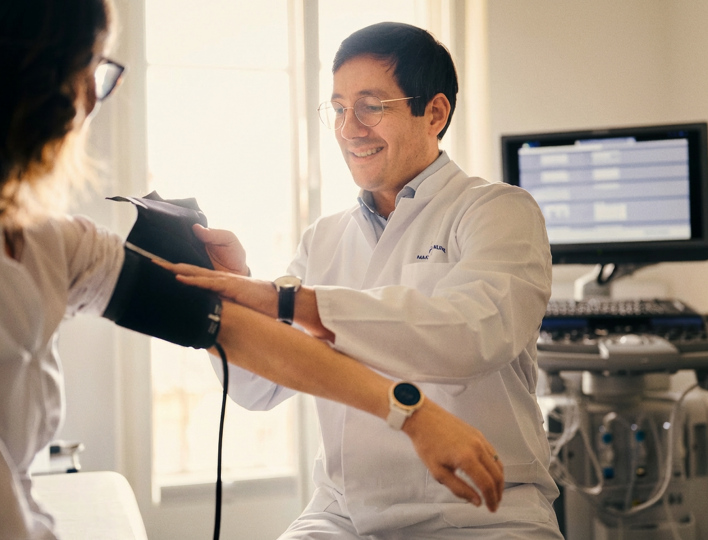
Prof. Dr. med. Timo Heidt misst Blutdruck einer Patientin

Situational dizziness and palpitations: stress-induced arrhythmia

A patient reports a gradual decline in energy levels, as well as dizziness and palpitations during periods of increased stress. Accordingly, following an initial assessment by her GP which revealed no abnormalities, a referral to a psychosomatic specialist was recommended.

However, during the joint assessment by the psychosomatic and cardiology departments, it was decided – despite unremarkable echocardiography and laboratory results – not to hastily classify the symptoms as functional, but instead to carry out extended rhythm monitoring.

This revealed brief episodes of cardiac arrhythmia (atrial fibrillation), which showed a clear association with periods of stress as recorded in the accompanying diary. It was only through this interdisciplinary decision that the cause was identified.

Following targeted cardiological treatment and accompanying psychosomatic support for stress management, the patient’s exercise tolerance stabilised significantly once again.


"At the Max Grundig Clinic, we combine internal medicine and psychosomatics in an integrated approach of the highest standard.”

Portrait von Timo Heidt
Prof. Dr. med. Timo Heidt, Medical Director

You would like to find out more?

Our team is here for you and your concerns.